Project Leadership
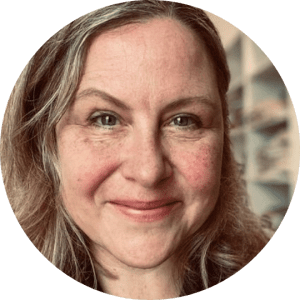
Dr. Susannah Bunce
Principal Investigator
Associate Professor, Human Geography, University of Toronto – Scarborough
Dr. Susannah Bunce’s research centres on the geographies and planning of urban communities and neighbourhoods and sustainable community building. She is interested in sustainable communities and strategies for socio-environmental justice at the urban neighbourhood scale. She engages with critical theories of urban commons and alternities, gentrification, environmental justice, urban political ecology, and more-than-human geographies to examine localized issues and politics of land use and community-based socio-environmental identifications with local spaces. She is interested in contestations caused by gentrification and other housing/land-based struggles. Her research also focuses on insurgent responses and more hopeful, future-oriented community-engaged practices, particularly those related to affordable and equitable land stewardship (urban community land trusts and urban eco-villages). She conducts most of her research in Canadian, British, and European cities.

Dr. Nicola Livingstone
Principal Investigator
Associate Professor, Bartlett School of Planning, University College London
Dr. Nicola Livingstone is Associate Professor in Real Estate at the Bartlett School of Planning, UCL. Before joining UCL she worked at Heriot-Watt University, where she completed her PhD in 2011. Nicola has published widely on real estate and urban studies and has recently been working on projects exploring investment market trends, housing densification, the evolution of the office market during the coronavirus pandemic and the impacts of changes to the planning system on cities. She has completed work for the RICS, BA/Leverhulme and the Investment Property Forum, and worked on an ESRC project on investment flows and residential development in London, Paris and Amsterdam (2019-22). Nicola has been working with colleagues the University of Toronto since 2017, and in 2020 co-edited the collection ‘Critical Dialogues of Urban Governance, Development and Activism: London and Toronto’. She is currently Principal Investigator in London for a project (2023-24) that develops this work further, funded by UCL and the University of Toronto through their Strategic Partnership call. Her work is broadly interdisciplinary, blending perspectives drawn from real estate, planning and governance and critical social science, interrogating our lived experiences of the built environment. Nicola is also Programme Director for the MSc International Real Estate & Planning Programme and leads the Real Estate and Economic Development (REED) research group in the Bartlett School of Planning.

Dr. Shauna Brail
Co-Investigator
Associate Professor, Institute for Management and Innovation, University of Toronto – Mississauga
Dr. Shauna Brail is an Associate Professor at the Institute for Management & Innovation, University of Toronto Mississauga and holds a cross-appointment at the Munk School of Global Affairs and Public Policy, University of Toronto. As an economic geographer and urban planner, her research focuses on the transformation of cities as a result of economic, social, and cultural change. Professor Brail’s research encompasses studies of broad urban economic challenges associated with 21st century cities – including the impacts of COVID-19 on cities; the relationship between cities and the digital platform economy, with a particular emphasis on mobility; and shifts in urban governance, policy and planning in connection to innovation and technological change. She advises governments and civic society organizations, both in Canada and internationally, on matters relating to urban economic change, housing and transportation policy innovation, and the regulation of digital platform technologies. Brail is an Affiliated Faculty at the Innovation Policy Lab in the Munk School of Global Affairs & Public Policy, Associate Director, UTM at the University of Toronto’s Mobility Network, and Recovery Theme co-lead at the Institute for Pandemics. She is an editorial board member at Applied Geography, Progress in Economic Geography and Urban Geography.

Dr. Susan Moore
Co-Investigator
Associate Professor, Bartlett School of Planning, University College London
Dr. Susan Moore is Associate Professor of Urban Development and Planning at the Bartlett School of Planning, UCL and she is a steering committee member of the UCL Urban Laboratory. Susan has an interdisciplinary academic background in Environmental Studies (BES, York), Planning (MES, York) and Human Geography (PhD, LSE). Her research focuses on relational geographies of urban and suburban development and governance and the circulation of so called ‘best practices’, particularly in relation to New Urbanism. Her most recent projects have involved collaborations with media theorists and big data analysts investigating the use of social media platforms in relation to processes of local urban change and planning, including LTNs. She is also a co-investigator for a Facebook-funded project on localising content governance, and is part of an international team of researchers comparatively investigating urban housing data cultures in UNECE countries. Susan is the post-graduate research tutor, responsible for co-ordinating the PhD programme within the School of Planning.

Dr. Michael Short
Co-Investigator
Associate Professor, Bartlett School of Planning, University College London
Dr. Michael Short is an urbanist interested in issues of design quality of development in the historic environment, undertaking practice-based projects, teaching, and research in three main areas. Firstly, he is interested in how design issues are negotiated through the planning process and how they are implemented on site. Secondly, he is interested in the conservation and protection of buildings and areas of the recent past, and the challenges that this presents for practice. And, thirdly, he is interested in the debates about increased building height and density in environments where the historic environment and character of place are relevant. At the heart of his interests is the production of a higher quality built environment. Furthermore, he is interested in queer pedagogies and the experiences of LGBTQ+ staff and students in higher education.

Dr. Alan Walks
Co-Investigator
Professor, Geography, Geomatics and Environment, University of Toronto – Mississauga
Dr. Alan Walks is a professor of urban geography and planning at the University of Toronto. His research has focussed on understanding the causes, consequences, and policy-options for addressing urban inequalities, with a focus on neighbourhood change and housing. His published scholarly articles have examined gentrification, the financialization of housing and automobile loans, urban debtscapes and debt-based inequalities, gated communities and other forms of neighbourhood segregation, condoization, automobility, and place-based political effects on voting and ideology. He is the editor of the book The Urban Political Economy and Ecology of Automobility: Driving Cities, Driving Inequality, Driving Politics (Routledge, 2015), and co-editor of three additional books: The Political Ecology of the Metropolis (ECPR/Columbia U Press, 2013); Changing Neighbourhoods: Social and Spatial Polarization in Canadian Cities (UBC Press, 2020); and Critical Dialogues of Urban Governance, Development and Activism: London & Toronto (UCL Press, 2021).
Research Team

Melissa Barrientos
PhD Student, Bartlett School of Planning, University College London
Melissa Barrientos is a PhD researcher at the Bartlett School of Planning and The Bartlett Centre for Advanced Spatial Analysis, University College London (UCL). She holds an MSc in Spatial Design from UCL and has 5 years of experience as an architect. Melissa’s research interests lie in spatial analysis topics with a focus on urban configuration and links between city structuring and functioning. Her interdisciplinary expertise combines architecture, urban design, and planning insights with quantitative methods and complexity science. Melissa’s doctoral research aims to deepen our understanding of the complex dynamics of urban growth and configuration within the phenomena of rapid urbanisation. She employs innovative tools such as network analysis, vector data, and spatial analysis and modelling to address the challenges faced by expanding cities. Her work investigates the effects of peripheral housing development on traditional cities, with a particular emphasis on mass-produced design models and potential repercussions on the city’s sustainability. In addition to her academic pursuits, Melissa is passionate about teaching and participating in various academic projects. She has presented her work at several congresses and seminars and is interested in using her research to inform policy and practice, ultimately contributing to positive change in the built environment of rapidly growing environments.

Dr. Laurel Besco
Assistant Professor, Geography, Geomatics and Environment, University of Toronto – Mississauga
Broadly speaking my research is focused on innovative law and policy approaches to tackling the complex and pressing challenges associated with sustainability. More specifically, my main focus has been on how design and implementation of legal instruments and policy tools can help advance sustainability in three areas: aviation, corporate decision-making, and tourism. While much of my research has focused on these issues in the Canadian context, I also seek to compare with other countries and to look at the issues at an international level.

Dr. Prentiss Dantzler
Assistant Professor, Department of Sociology, University of Toronto
Dr. Prentiss Dantzler is an Assistant Professor in the Department of Sociology and Faculty Advisor to the School of Cities at the University of Toronto. He also is a Research Associate with the National Initiative on Mixed Income Communities at Case Western University. Previously, he held faculty appointments at Georgia State University (Urban Studies) and Colorado College (Sociology). His research focuses on housing policy, neighborhood change, race relations and residential mobility. His work broadly examines how and why neighborhoods change and how communities and public policymakers create or react to those changes. Prentiss received his Ph.D. in Public Affairs with a concentration in Community Development from Rutgers University-Camden. He also holds an M.P.A. from West Chester University and a B.S. from Penn State University.
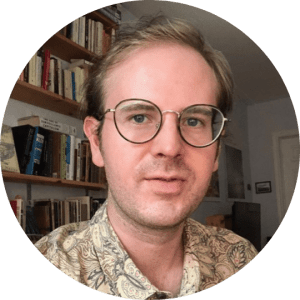
Sean Grisdale
PhD Candidate, Geography and Planning, University of Toronto
I am a PhD candidate in geography and planning at the University of Toronto. Some of my research interests include the political economy of (public) land and land ownership, gentrification, urban inequality, condominium development, and the financialization of housing more broadly. I have previously published research on the impacts of short‐term rentals (Airbnb) and housing financialization on Toronto’s rental market and I am currently engaged in a project looking at the impact of the Covid-19 pandemic on evictions in Canada’s largest cities.
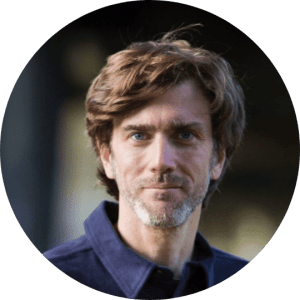
Dr. Andrew Harris
Associate Professor, Geography and Urban Studies, University College London
Dr. Andrew Harris is an Associate Professor in Geography and Urban Studies at University College London, where he convenes the interdisciplinary Urban Studies MSc, and is Co-Director of the UCL Urban Laboratory. His research and teaching often centres on recent urban transformations in London, including work on art and gentrification, high-rise urbanism (e.g. the Shard and Canary Wharf), culture-led urban regeneration, and creative suburban landscapes. His work is characterised by new experiments with comparative urbanism: working across Mumbai and London to contest Eurocentric assumptions in urban and social theory, pursuing multi-sited research that foregrounds intra-urban comparisons, and more recently developing work around vertical urbanism across London and Paris. His research has also included a close focus on transport infrastructure, particularly in urban India, exploring elevated roads and walkways as well as buses.

Dr. Tom Kemeny
Associate Professor, Munk School of Global Affairs and Public Policy, University of Toronto
Dr. Tom Kemeny is an Associate Professor at the Munk School of Global Affairs and Public Policy at the University of Toronto. His research is focused on cities, inequality and technological change. Current projects include a study of the links between innovation and spatial income disparities in the United States; work tracing how diverse workforces in Britain may be making the country more productive; and an investigation of the changing geography of wealth in the United States. Dr. Kemeny won the 2019 Understanding Society Paper Prize for a study linking migration and the Brexit vote. For his work on the effects of knowledge-sharing in local social networks, he was awarded the 2016 Urban Land Institute Prize for the best paper published in the Journal of Economic Geography. In 2015, together with Michael Storper, Taner Osman and Naji Makarem, he published The Rise and Fall of Urban Economies: Lessons from San Francisco and Los Angeles(Stanford University Press). For more information, visit Tom’s website: https://tkemeny.github.io/.

Dr. Julie Mah
Assistant Professor, Human Geography, University of Toronto – Scarborough
Dr. Julie Mah is an Assistant Professor at the University of Toronto Scarborough in the Department of Human Geography – City Studies Program. Her research focuses on affordable housing issues, evictions, gentrification and displacement, and equitable development approaches. She received a PhD in planning from the University of Toronto and she has worked as a planning consultant on community improvement plans, cultural plans, and economic development strategies in small and mid-sized cities in Canada. Current research focuses on: (1) investigating evictions and above guideline rent increases in Ontario; (2) examining the impacts of housing policy and regulatory frameworks on rental affordability and tenant displacement; and (3) evaluating the effectiveness of value capture tools to generate new affordable housing. Past research investigated gentrification-induced displacement (direct and indirect) of low-income senior tenants in downtown Detroit.

Loren March
PhD Candidate, Geography and Planning, University of Toronto
Loren March is a queer and trans geographer, a PhD Candidate in Human Geography and an instructor in the Department of Geography and Planning at the University of Toronto. Their work focuses broadly on queer urban ecologies, examining shifting affective relations with more-than-human spaces amidst processes of parks-led redevelopment and environmental gentrification in Toronto. Loren engages with the possibilities of queer affective ethnography as a style of doing research that pays attention to marginalized relational lifeworlds, affective experiences and stories. They are a member of the Affordable Housing Challenge Project at the University of Toronto’s School of Cities, and a convener at Anthropology’s Ethnography Lab. They are also co-editor of the book Critical Dialogues of Urban Governance, Development and Activism: London and Toronto from UCL Press (https://www.uclpress.co.uk/products/126992). Loren received their Masters of Environmental Studies, with a focus in Critical Urban Theory and Planning, from York University.

Marjan Marjanović
PhD Student, Bartlett School of Planning, University College London
Marjan Marjanović is a PhD student at the Bartlett School of Planning. His doctoral research concerns the governance of circular economy transitions in shrinking cities and regions, with case studies in the Netherlands and Finland. Previously, Marjan completed a post-graduate programme in International Spatial Development Planning at KU Leuven (BE). He holds master’s degrees in spatial planning, regional development, and environmental policy from Radboud University Nijmegen (NL), University of Belgrade (SRB), and the Swedish School of Planning at Blekinge Institute of Technology (SE). He was also a Frédéric Bastiat Fellow in Public Policy at George Mason University (US) and a Fulbright Fellow at the University of Illinois – Chicago, Department of Urban Planning and Policy (US), where he studied the processes of urban shrinkage and related planning and policy environments and actions. As a practitioner, he was engaged with projects and studies under the scope of the EU Cohesion policy, with a focus on European territorial development initiatives. Marjan’s work focuses on evolutionary governance perspectives and the role of ideas in policy development, while his broader research interest lies in the domain of planning for shrinking cities, strategic spatial planning, planning theory, circular economy, and urban governance and politics.

Dr. Lucy Natarajan
Associate Professor, Bartlett School of Planning, University College London
My research focuses on the interface between citizens and the state. I have a strong interest in research that has a qualitative, discursive, or participatory action research orientation. Most recently in London I have been working with the London Borough of Barnet on food security issues and the understandings of partnerships, how they are reforming. This builds on early work around the parlous state of public debate in the UK and wider concerns about the strategizing of Westminster to curtail devolution of powers and the context of deep socio-economic inequalities in the UK. At the same time, I am an optimist looking for positive cases where partnerships within and beyond London have been growing and interested in the evolution of civil society activism. I have previously worked for planning bodies including the Royal Town Planning Institute, Commonwealth Association of Planners, and Global Planners Network, as well as third sector research bodies. I am a member of the UK2070 Commission’s steering group, this is a QUANGO that advocates for national policy to tackle spatial equality. I co-edit the journal Built Environment.
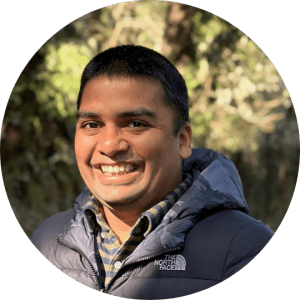
Dr. Gaurav Mittal
Postdoctoral Fellow, Institute for Management and Innovation, University of Toronto – Mississauga
Dr. Gaurav Mittal is a Mobility Network Postdoctoral Fellow at the Institute for Management & Innovation, University of Toronto Mississauga. He holds a PhD in urban political geography from the National University of Singapore and a master’s degree in urban policy & governance from Tata Institute of Social Sciences. His academic interests lie at the intersections of urban transport, policy mobilities, and governance. He brings these categories together to critically examine the role of the state in ordering urban societies. More recently, his research has focused on governance challenges of ongoing urban mobility transitions.
Dr. Dimitrios Panayotopoulos‐Tsiros
Research Associate, Bartlett School of Planning, University College London
Dr. Dimitrios Panayotopoulos‐Tsiros is a Research Associate at the Bartlett School of Planning, UCL with a background in architecture and urban planning. His research interests span Planning, Architecture and Economic Geography and revolve around three central themes: the socio-spatial patterns of urban transformation and the processes of development and growth. His research centres on social and policy aspects of spatial development processes and design, with a particular focus on contributing to the emerging discussion of ‘levelling up’, social infrastructure provision, and the perception of place. He has collaborated on a range of research projects that explore industrial symbiosis initiatives in Europe, the spatial transformation of manufacturing in London, levels of inclusion and inequality in British suburbs, diverse cultures of housing data management across Europe and Central Asia, and the significance of social infrastructure in the development of ‘left-behind places’ in England. Currently, he is investigating the degradation of social infrastructure in “left-behind” places in Sacriston, County Durham, in North-East England from planning and socio-economic standpoints. At the Bartlett School of Planning, Dimitrios is responsible for coordinating and teaching modules on Regional Development and Planning Practice, as well as leading seminars on critical urban design debates.
Dr. Pablo Sendra
Associate Professor, Bartlett School of Planning, University College London
Dr. Pablo Sendra is an architect and urban designer. He is an Associate Professor at The Bartlett School of Planning, UCL. He combines his academic career with professional work through his own urban design practice, LUGADERO LTD, which focuses on facilitating co-design processes with communities. At UCL, he is the Director of the MSc Urban Design and City Planning Programme and the Coordinator of the Civic Design CPD. He has carried out action-research projects in collaboration with activists and communities. His research focuses on social housing, community activism, co-design and collaborative planning process, social infrastructure, public spaces, and the impact that regeneration processes have on people and their social relationships. During the pandemic, he carried out research on how social infrastructure makes communities more resilient. He is co-author of Designing Disorder (with Richard Sennett, 2020), Community-Led Regeneration (with Daniel Fitzpatrick, 2020), and co-editor of Civic Practices (with Maria Joao Pita and CivicWise, 2017). Recently, he has published a paper that brings together his experiences of co-producing work with communities titled “The Ethics of Co-Design”. He is part of the City Collective for the journal City.

Rotem Shevchenko
PhD Student, Bartlett School of Planning, University College London
Rotem Shevchenko is a PhD researcher at the Bartlett School of Planning (BSP), UCL. As an architect, she is interested in how social and economic contemporary trends are being interpreted into the design process. Her doctoral research looks at new forms of urban development in the post pandemic era, with a focus on hybridity (i.e. the experiential city – work.live.play) and the process of privatisation with a particular focus on the privatisation of communal life. Rotem has been exploring urban curation as a means for shaping and transforming neighbourhoods in Tel Aviv. This emerging phenomenon is examined within entrepreneurial urban settings supported by local governments, elites and private companies (including real estate providers). Accordingly, the curator selects, filters, categorises, constructs and displays desirable narratives and representations of the city. The idea that these behaviours are accessible to a relatively narrow group within the urban fabric implies the homogeneous nature of contemporary urban lifestyle. Thus, while unwrapping how urban curation is enacted, the research also questions its wider implications in terms of inequality and exclusion, as well as roles and responsibilities when it comes to shaping and transforming neighbourhoods.
 Post-Covid Cities