Since 2019, multiple shocks to the global system have rocked urban chains of food supply. In both London and Toronto, one major impact of the COVID-19 pandemic was the extent to which civil society was called on for immediate help. Following that, critical logistic chains underpinning food supply have been further tested, interrupted, and had their fragility exposed by climate change and wars. How food security networks fare ongoing, will be an important focus for our research. To that end there are some critical questions, to be asked as part of dialogic research between London and Toronto. This blog kicks off the discussions with observations from London in the summer of 2023.

Figure 1: UN Graphics for SDGs 9 & 11
In the Post-Covid Cities exchanges, we are unpacking the ways in which urban development is currently changing, drawing on our work in the two metropolises. We have been dialoguing around two SDGs: SGD 9 ‘Build resilient infrastructure, promote inclusive and sustainable industrialisation and foster innovation’; and SDG 11 ‘make cities and human settlements inclusive, safe, resilient and sustainable’.
In our exchanges in London in early 2023, we were reflecting on how growth is unhelpfully imbricated in ideas of innovation and sustaining cities. Alternative conceptualisations of inclusive urban transformation, fuel new research framings and part of our work relates to food security as a particularly urgent point of focus.

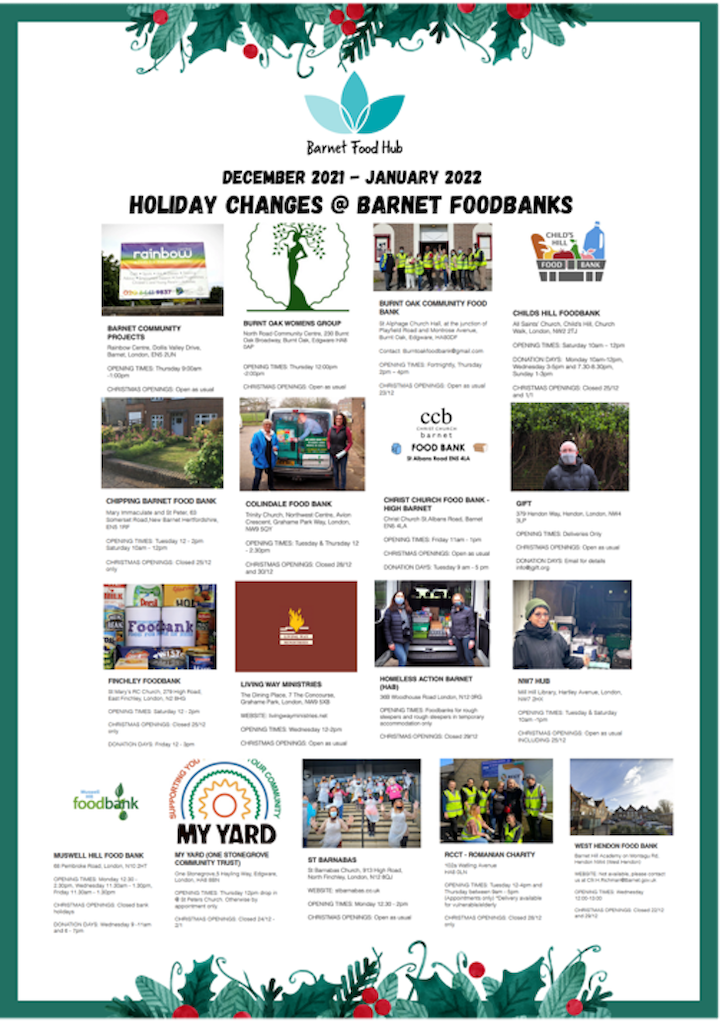
Figure 2: Food Bank Users 2020-2021, one site in London
Food bank use has been on the rise in both cities (Natarajan et al, 2022; Bunce et al, 2020) in recent years. The prevalence of civil society as an actor in reworking the provision of emergency urban amenities is undeniable. While the work of non-governmental groups in the food security space is neither new nor unproblematic (Bunce, 2016; Livingstone, 2015), the backdrop of global crises certainly is. During the pandemic, we observed the formation of new stakeholder groups and priorities in urban food action and continue to trace these post-pandemic
It appears that urban food governance has been reoriented – at least for moments of crises – around the local provision food banks. In London, community groups have not only stepped up but been encouraged by local authorities to take over coordination for whole districts. They have been providing a form of clearing house for the remnants of state and market, taking on and repurposing Local Authority expenditure and supermarket excess to sustain communities.
It also seems that awareness of food insecurity by the provider is becoming more sensitised towards the potential of ‘urban place’ and the diverse nature of challenges when seen by individuals affected. In London, social networks around food have been at pains to ensure that the diverse needs in localities are taken on board by others within their neighbourhoods. The prevalence of local groups triaging from food access points out to other services (e.g. safeguarding) and the new focus on food bank users’ food preparation skills are testament to that.
Where reorientation and sensitisation continue with civil society at the centre of emergency provision, it might at first glance seem that there is openness to emergent, upwards and civic engaged processes. Certainly, the community providers have (re-)focused on mundane elements of urban living and tuned into the diversity within urban food ecologies. However, it is important to note that this ‘community turn’ has taken place in the context of uncertain global flows, a wider erosion of local state powers, and a highly unequal society.
So, it is important to ask:
- Which urban networks help food security to endure over the longer term?
- What are the ‘governance experiments’ in food provision impacts on existing inequalities?
- How might emerging forms of food citizenship relate to democratic systems?
As we move towards our second major exchange in October 2023, we will continue to reflect on the premises of SDGs 9 and 11 and the notion of a ‘post-pandemic’. The considerations for food security are immediately apparent, but the complexities of the evolving context need more attention. We hope closer examination of the trends in both cities and the specificities of civic action and explanations of these will help shed more light.
Lucy Natarajan, Summer 2023
References
Bunce, S., Livingstone, N., March, L., Moore, S., & Walks, A. (2020) Critical dialogues of urban governance, development and activism: London and Toronto. UCL Press.
Bunce, S. (2016). Pursuing urban commons: Politics and alliances in community land trust activism in East London. Antipode, 48(1), 134-150.
Livingstone, N. (2015). The Hunger Games: Food poverty and politics in the UK. Capital & Class, 39(2), 188-195.
Natarajan, L., Grimble, G., Cho, H., Armstrong, M., & Woodward, A. (2022). Food Security & Civil Society: Research Findings Report, 2022. [Available at: https://www.ucl.ac.uk/everyday-economy/sites/everyday_economy/files/ucl_2022_food_security_findings.pdf]
Images
Figure 1: SDG9 & SDG11 (Source: United Nations, https://unstats.un.org/sdgs/indicators/Global%20Indicator%20Framework%20after%202023%20refinement_Eng.pdf)
Figure 2: User of a Food Bank in the London Borough of Barnett 2020-2021 (Source: © George Grimble)
 Post-Covid Cities